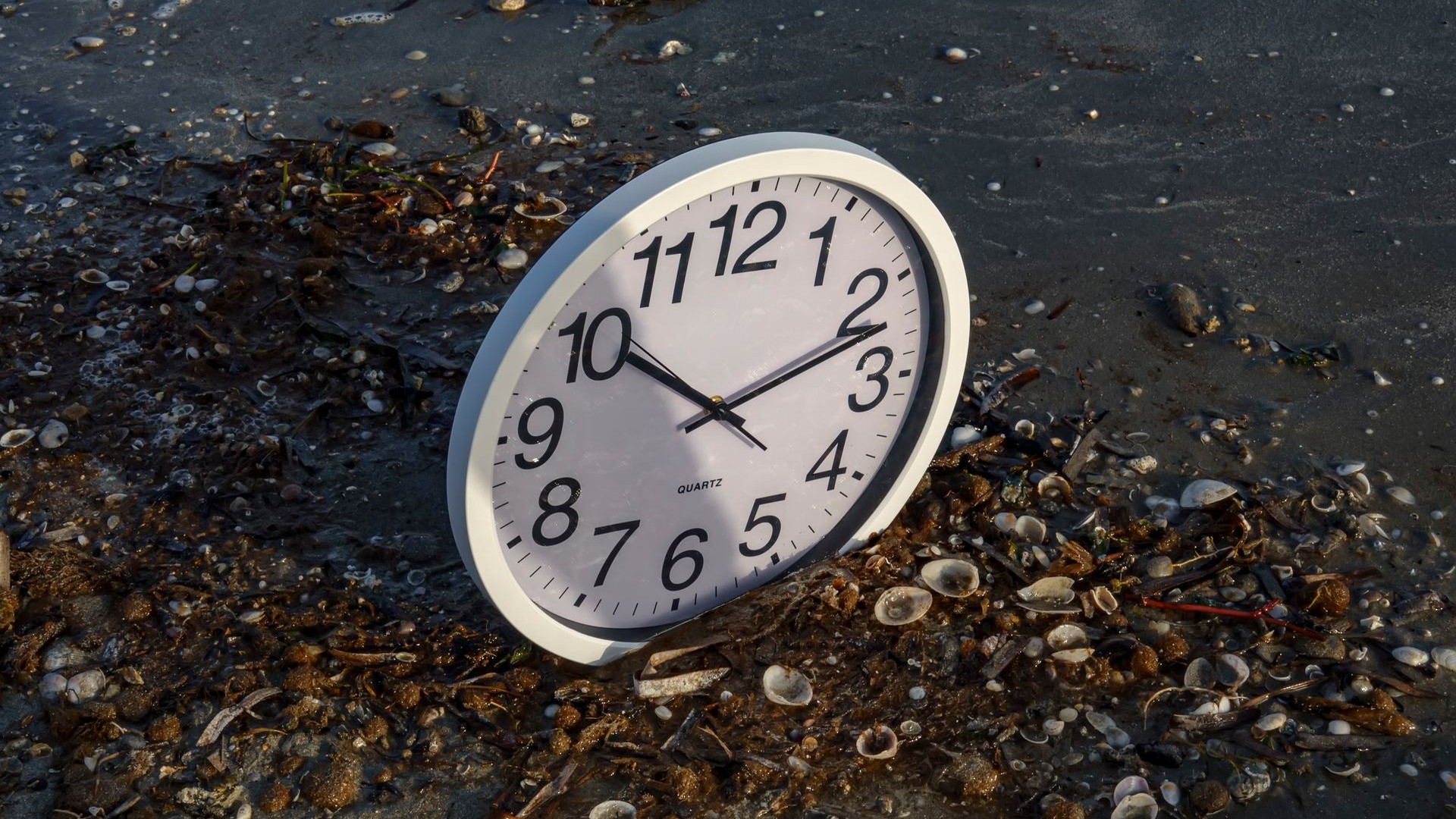
Time Is Your Most Valuable Resource
I'm sure you've heard the phrase "time is money" as a way to say that we should work hard and avoid laziness, but time is actually the most valuable resource we have. You can exchange your time for money by working right up until the end of your life, but you can't magically get more time. What you can do is learn to optimize your resources to save yourself time where it counts, and use that time in the best way for you.
I'm sure you've heard the phrase "time is money" as a way to say that we should work hard and avoid laziness, but time is actually the most valuable resource we have. You can exchange your time for money by working right up until the end of your life, but you can't magically get more time. What you can do is learn to optimize your resources to save yourself time where it counts, and use that time in the best way for you.
Ancient Greek philosopher Theophrastus said that "time is the most valuable thing a man can spend." Modern computer programmer Jamie Zawinski said "Linux is only free if your time has no value," referring to the idea that Linux as a free operating system actually has a huge hidden cost in taking significantly more time to set up and configure. We frequently look at cost in terms of money, but we don't always translate that to how it impacts other resources.
Time is the one resource that we can never get more of beyond a certain point, and that makes it the most valuable. A useful exercise is to think about how much you make per hour, and use that to figure out if you're gaining or losing money by paying someone else to take on work for you. If you get paid hourly this is easy. If you're salaried, or have compensation tied up in things like options and bonuses, you can take what you make in a year and divide it by the number of work hours in a year (52 weeks times 40 hours a week is 2080 hours) and divide your total by that to get a rough per-hour estimate.
Let's say you come up with $50 per hour as a nice round example number. It's probably around fifty dollars to save an hour of time. If you can spend 45 minutes driving to pick up food, or pay someone an extra $10 to deliver it, that's probably worth it. Obviously you need to make your own budgeting and financial decisions, everyone's situation is different, but I've often found that people err too far on the side of refusing to spend even a small amount of money that would make their life significantly easier.
It's worth noting that you can't always immediately spend more time for money in this way. If you work a 40 hour a week job, you probably can't add more hours. But in general, you can spend time focused on your job to start making more money. Skills training to get a promotion, job searching for a higher paid gig, etc.
There's a lot of hidden labor that goes into any creative or business work. One famous example is how Adam Smith, who wrote An Inquiry into the Nature and Causes of the Wealth of Nations, had time to focus on writing because he didn't have to do things like cook his own meals. In 2020 when everyone spent months isolating, I saw even some of the most covid-conscious folks keep having a housekeeper come over. You could argue there's a laziness aspect to it, but it's also clear that successful people know how to prioritize their time.
This isn't to say you shouldn't do anything yourself. There's always knowledge to gain from learning to do something, and sometimes that is the best use of your time. Do you like working on cars? It might technically be a better use of your time to take your car to the shop for an oil change, but if you find the process to be enjoyable, there's something very zen about doing the work yourself. Similarly if you find joy in learning new recipes, cook dinner more often.
Just don't turn your hobbies into jobs. It's become very popular to talk about turning hobbies or passion projects into "side hustles" to make money, but often this just sucks the joy out of something you used to love, and doesn't make enough money to be worth it. Malcom Gladwell talked about the idea that it takes 10,000 hours to become an expert in something. It's almost always a better idea to continue to focus on your primary career to make more money, instead of trying a bunch of different things, unless you're serious about making a complete career change.
The benefit to thinking about time as your most valuable resource isn't that you become a workaholic, it's that you learn to appreciate your time as much as possible. Stop to smell the roses, or take up gardening and learn to grow roses yourself. Just don't get trapped in a cycle of menial tasks that prevent you from focusing on the important things, life is too short for that. If you learn to treat time like a finite resource, it becomes much easier to see where you should make tradeoffs and where you shouldn't. And hopefully that makes it easier to focus on what's truly important.
I've intentionally chosen not to support comments on this site. If you feel a strong need to discuss something, you can use the social sharing links above to write your own comment. If this post has sparked any big ideas, either positive or negative, I encourage you to write your own post and share it on your own website. Feel free to drop me a link in the contact section, and I'll add links here to interesting responses.